Embracing Change Worksheet: Your Guide to Navigating Life's Transitions
Change is a constant in life, whether it’s a new job, moving to a new city, or personal growth. Embracing change can be challenging, but with the right mindset and tools, you can navigate these transitions with confidence. This guide will help you understand how to embrace change and includes a downloadable worksheet to support you on this journey.
Downloadable Worksheet: Embracing Change
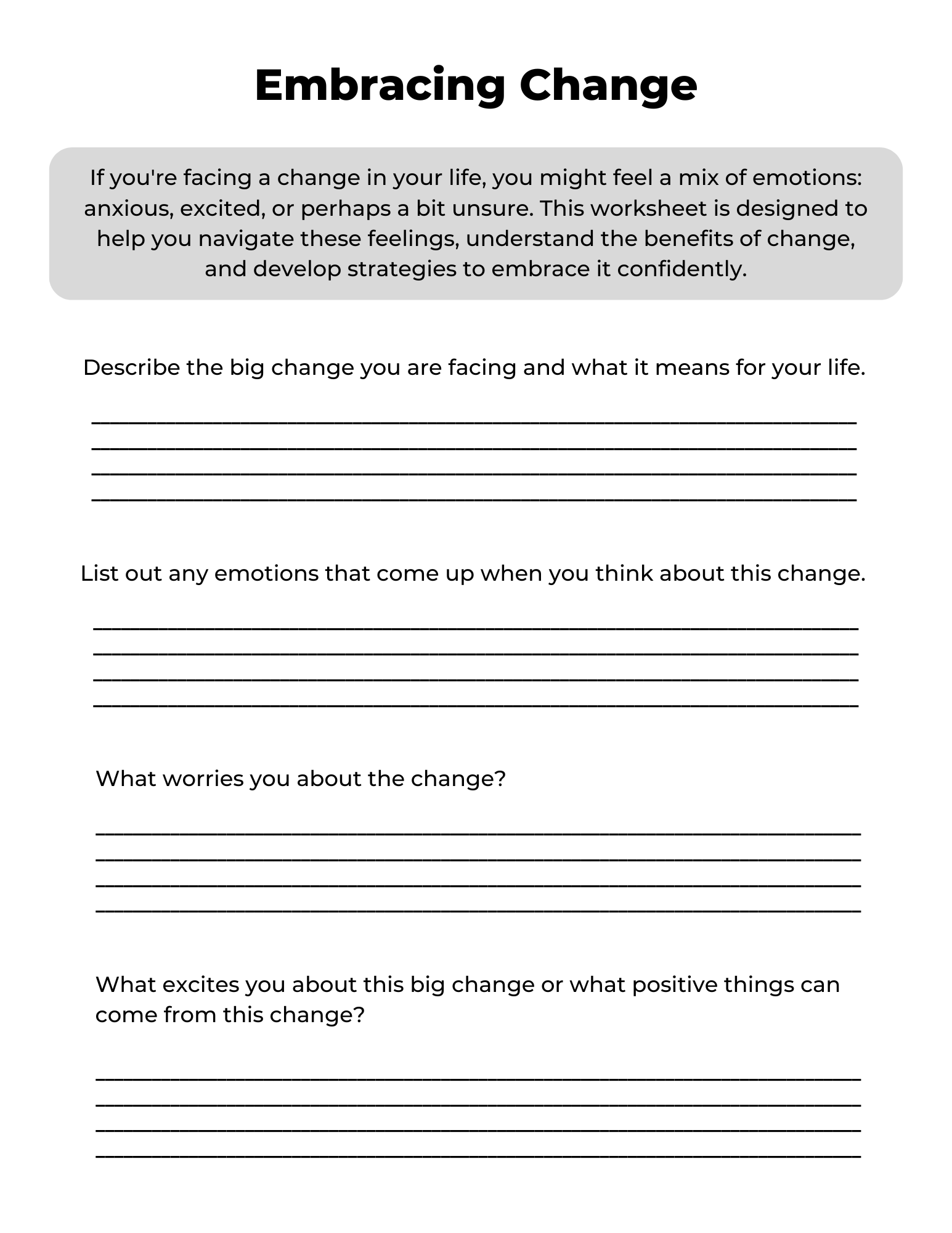
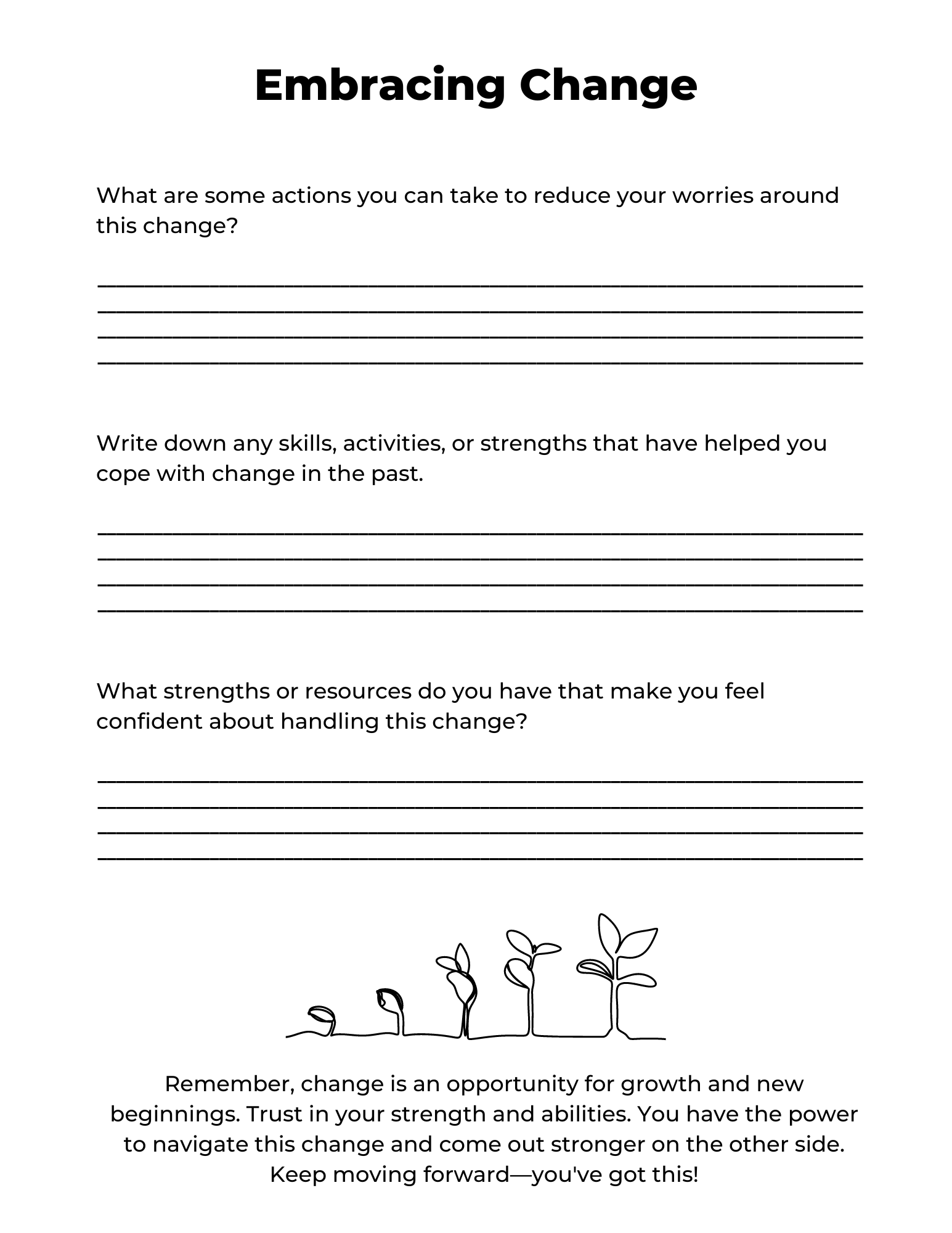
To help you embrace change, we've created a simple and concise worksheet. This worksheet will guide you through reflecting on what excites you about the change, identifying your strengths and resources, and recalling past coping strategies.
Download the Embracing Change Worksheet (PDF):
Embracing Change Worksheet Dealing with Change.pdfEmbracing Change Group Therapy Session:
Follow the instructions below to effectively incorporate the "Embracing Change" worksheet into your group therapy session.
Embracing Change Group Therapy.pdfWhy Embrace Change?
Embracing change is essential for personal growth and resilience. Here are some reasons why embracing change is beneficial:
Personal Growth: Change pushes us to develop new skills and gain new experiences.
Resilience: Learning to navigate change strengthens our ability to cope with future challenges.
Opportunities: Embracing change can open doors to new possibilities and rewards.
Tips for Embracing Change
1. Acknowledge Your Feelings
It's normal to feel anxious or uncertain about change. Acknowledge these emotions rather than suppressing them.
2. Stay Positive
Focus on the potential positive outcomes of the change. Visualize the benefits and opportunities it might bring.
3. Be Flexible
Adaptability is key. Be open to new ways of thinking and doing things.
4. Set Small Goals
Break down the change into manageable steps. Achieving small goals can build confidence and momentum.
5. Seek Support
Talk to friends, family, or a counselor about your feelings. Support from others can provide comfort and perspective.
6. Practice Self-Care
Take care of your physical and mental well-being. Exercise, eat well, and make time for relaxation.
7. Stay Informed
Educate yourself about the change. Knowledge can reduce fear and increase your sense of control.
8. Focus on What You Can Control
Identify aspects of the situation you can influence and take action on those. Let go of what you can't control.
Remember: Change is an opportunity for growth and new beginnings. Trust in your strength and abilities. You have the power to navigate this change and come out stronger on the other side. Keep moving forward—you've got this!
Frequently Asked Questions
Why is change so difficult?
Change can be challenging due to fear of the unknown, loss of control, and stepping out of our comfort zones. However, with the right mindset and tools, it is possible to navigate change successfully.
How can I become more adaptable to change?
Practicing flexibility, staying positive, setting small goals, and seeking support can help you become more adaptable to change.
What are some self-care activities to manage stress during change?
Exercise, mindfulness and meditation, journaling, and maintaining a routine are excellent self-care activities to manage stress during change.
By understanding and implementing these strategies, you can turn the challenges of change into opportunities for growth and development. Embrace the journey and trust in your ability to succeed.