8 Creative Metaphors for Understanding Internal Family Systems
Internal Family Systems (IFS) is a therapeutic model that views the mind as a complex system of interrelated parts, each with its unique role and personality. To help clients better understand and relate to these parts, therapists often use creative metaphors.
These metaphors provide a visual and conceptual framework, making the abstract concepts of IFS more tangible and relatable. Here are eight imaginative ways to describe these parts:
1. The Garden and the Gardener
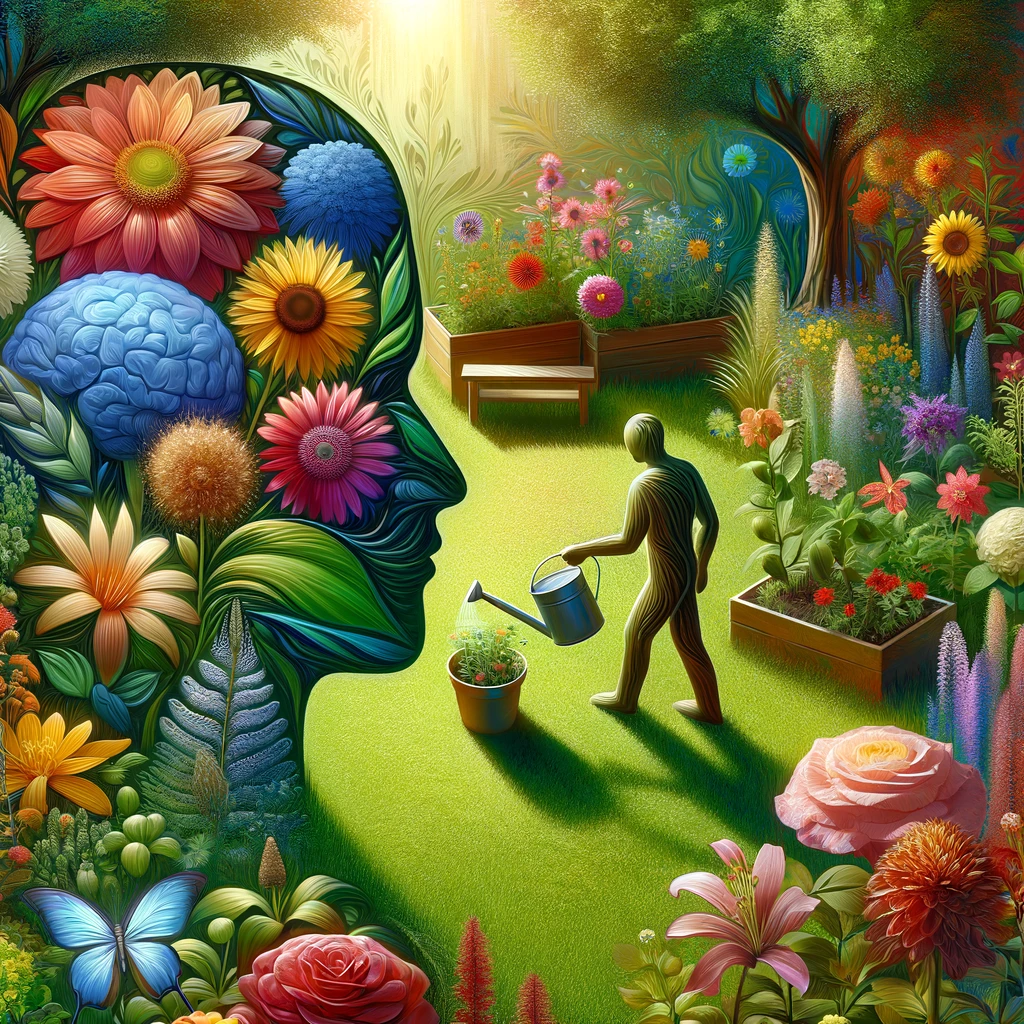
Imagine your mind as a garden, with each part being a unique and beautiful flower.
You, the Self, are both the gardener tending to these flowers and the fertile soil that nurtures them. This metaphor emphasizes the nurturing and caring role of the Self, providing support and understanding to each part.
The Self as the Gardener
Nurturing Care: In this analogy, you, as the Self, are likened to a gardener. This role embodies the act of nurturing, caring for, and attending to each flower (part of your personality). Just like a gardener who waters, prunes, and ensures each plant receives adequate sunlight, the Self provides attention, understanding, and support to every internal part.
Understanding Individual Needs: Every flower in the garden has its unique requirements for growth. Similarly, each part of your personality has specific needs and emotions. The Self, as the gardener, recognizes and attends to these individual needs, fostering growth and harmony within the internal system.
The Self as the Garden
A Fertile Ground for Growth: The Self is also the garden itself – the fertile soil where these flowers grow. This aspect of the analogy represents the nurturing environment that the Self provides for the parts. It's the foundation of safety, acceptance, and love where every part can thrive.
Diversity and Unity: A garden is rich with diverse flowers, each contributing to the overall beauty. Similarly, the diverse parts of your personality, with their unique qualities and roles, create the richness of your inner world. The Self, as the garden, holds these parts together in a unified and beautiful diversity.
2. The Story and the Blank Page
Consider your parts as letters and words that create stories. The Self is like the blank page, the essential backdrop on which these stories are written. This metaphor highlights the foundational role of the Self in giving space and context to our internal narratives.

The Self as the Blank Page
Essential Foundation: The Self is like the blank page in a book. It's the essential backdrop upon which the letters (our emotions, thoughts, and experiences) are written.
Enabling Expression: Just like a story requires a page to be told, our inner parts need the Self to express themselves. The blank page doesn't alter the letters or words; it simply provides the space for them to exist.
Context and Coherence: The page gives context and coherence to the letters and words. Similarly, the Self provides a context for our inner parts, allowing them to form a coherent narrative.
Indispensable for Existence: Without the blank page, the letters and words would have nowhere to manifest. In the same way, without the Self, the different aspects of our personality would lack a unified space to coexist and be understood.
This analogy beautifully captures the indispensable role of the Self in hosting and giving meaning to the diverse components of our internal world, much like a blank page that holds and unifies the letters to tell a story.
3. The Room and Its Furniture
Think of your parts as furniture in a room, each serving a different function. The Self is the room itself, the space in which all furniture exists. This imagery underscores the idea that the Self provides the environment for each part to perform its role.

The Self as the Room
Space for Existence: The Self is envisioned as the whole room, providing the necessary space where different pieces of furniture (our inner parts) can exist. Just like furniture fills a room, our emotions, thoughts, and memories occupy the space of the Self.
Accommodating Diversity: Each piece of furniture has a distinct function and style, much like how each part of our personality serves a unique role and has its own characteristics. The room, or the Self, accommodates this diversity, allowing each part to be present and functional.
Harmonizing the Interior: The way furniture is arranged in a room can affect the overall feel and functionality of the space. Similarly, the Self harmonizes these different parts, ensuring they coexist in a way that is balanced and conducive to overall well-being.
The Essential Framework: Without the room, the furniture would have no place to be set. In the same way, without the Self, our inner parts would lack a framework to exist and interact. The Self is essential in providing structure and context for these parts.
This analogy illustrates the role of the Self as a container and organizer of our inner world. It emphasizes the importance of the Self in providing space, structure, and harmony for the various parts of our personality, akin to how a room holds and arranges different pieces of furniture.
4. Understanding Anger Through Moana
Emotions are an integral part of our human experience, and one emotion that often demands our attention is anger. Anger, like many emotions, can be complex and powerful, and how we navigate it can significantly impact our well-being and relationships. To help conceptualize and manage anger, let's explore a metaphor inspired by the Disney movie "Moana."

In "Moana," the character Te Fiti is a goddess who undergoes a dramatic transformation into the fiery and destructive Te Kā after her heart is stolen.
This transformation serves as a metaphor for how anger can manifest within us when it is not understood or acknowledged. By reimagining this storyline, we can gain valuable insights into our own emotional landscape.
Identification and Exploration
In our metaphor, Moana represents the Self, the core of our being. Just as Moana embarks on a journey beyond her island's reef to find Te Fiti, we, too, embark on a journey to understand our anger. This journey begins with identification and exploration. We acknowledge that anger, like Te Fiti, resides within us, and we seek to understand it without judgment, shame, or attempts to suppress it.
Acknowledgment and Compassion
As Moana acknowledges the pain and loss behind Te Kā's fiery exterior, we extend empathy and compassion to our anger. We view it through a lens of vulnerability, trust, and compassion. This step involves recognizing that our anger, although intense, often conceals deeper emotions and unmet needs. By acknowledging these underlying aspects, we connect with our anger on a more profound level.
Transformation through Understanding
Moana's act of restoring Te Fiti's heart symbolizes the transformative power of understanding and compassion. Similarly, as we delve deeper into our anger, we begin to transform it. We recognize that anger is not our true identity; it is a part of us, but not the whole. Through self-reflection and introspection, we can separate our true selves from the intensity of anger.
The Role of Anger in Our Lives
This metaphor highlights the significance of anger in our lives. Anger is a valid and natural emotion, often signaling unmet needs, boundaries, or injustices. However, it is how we respond to and manage this emotion that matters. Unchecked anger can cause harm, both to ourselves and our relationships, similar to how Te Kā's rage threatened to engulf the world.
Not Defined by Our Parts
Perhaps the most profound lesson from this metaphor is that we are not defined by our anger or any single emotion. Like Moana, we are complex beings with a range of emotions and experiences. Anger is just one part of our internal landscape. Recognizing and accepting these parts without allowing them to dominate us leads to a more authentic and balanced life.
5. The CEO and the Employees
Visualize your parts as employees, each with unique skills and roles, and the Self as the CEO. Sometimes these parts try to take over the CEO's role, leading to imbalance. The CEO's job is to understand each employee's contribution and ensure they work harmoniously.

The Self as the CEO
Leader of the Company: In this metaphor, the Self is the CEO, the central figure in the company, responsible for overseeing and harmonizing the various departments (or parts of our personality).
Providing Direction and Harmony: Just as a CEO guides and unites the different functions of a company, the Self harmonizes our inner parts. This involves listening to their inputs, understanding their roles, and ensuring that their actions align with the overall well-being of the individual.
The Parts as Employees
Diverse Roles and Contributions: Each employee in the company represents a different part of our personality. These parts, like employees, have specific roles, responsibilities, and perspectives.
Collaboration and Input: In the 'boardroom' setting, each employee (part) has a voice and contributes to discussions. Their inputs are valuable for the decision-making process, just as each internal part has its unique insights and emotions that contribute to our self-understanding.
Harmonized under Leadership: While each part has its say, they must ultimately operate under the CEO's (Self's) guidance. This ensures that the company (the individual) functions coherently and effectively, with all parts working in unison towards common goals.
This metaphor effectively illustrates the role of the Self as a leader and harmonizer within our internal system. It underscores the importance of a strong, balanced Self that can listen to, understand, and integrate the various parts of our personality, much like a CEO who skillfully manages and unites the diverse elements of a company.
6. The Orchestra and the Conductor
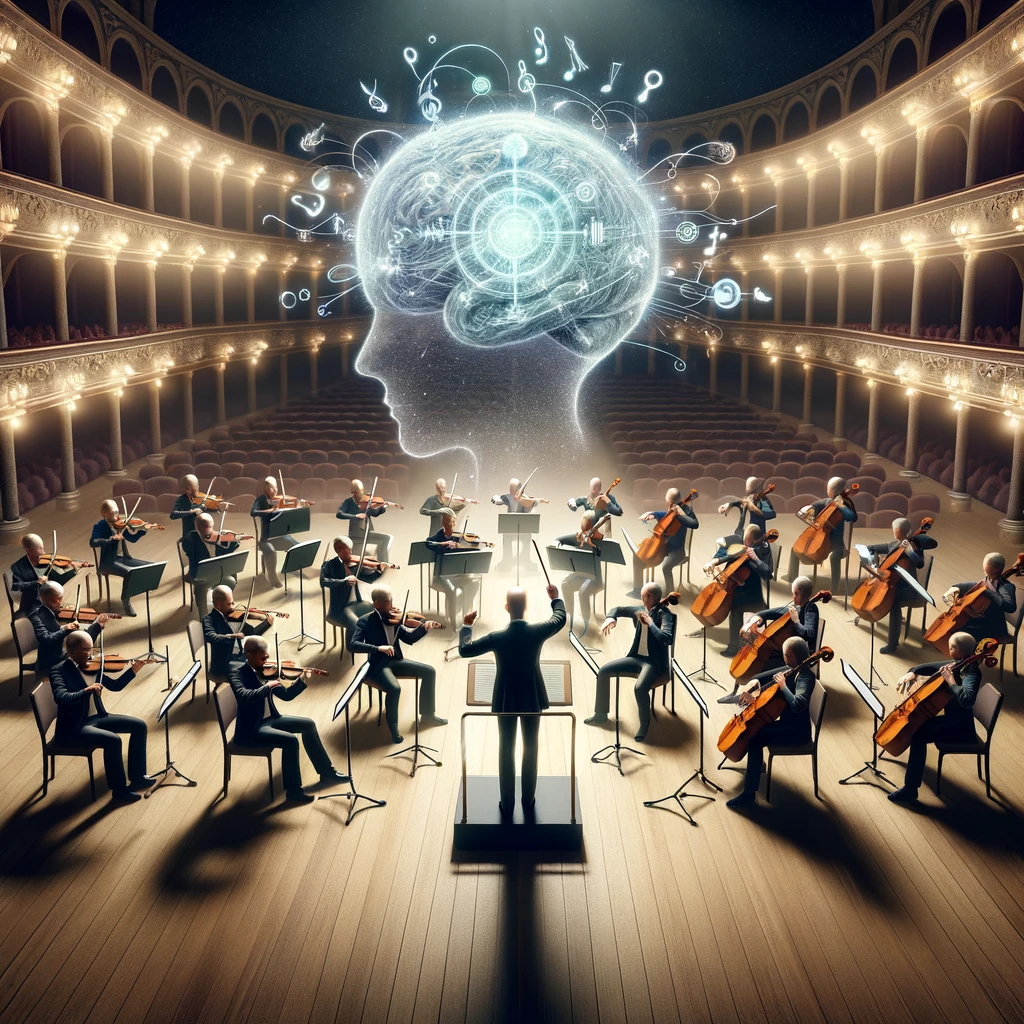
In this metaphor, the Self is the conductor, and the parts are the instruments of an orchestra. Without the conductor, the instruments may play out of sync or overpower each other, illustrating the need for the Self to harmonize and lead the parts.
The Self as the Conductor
Leading the Orchestra: The Self, like a conductor, plays a crucial role in guiding and harmonizing the orchestra, which represents the different parts of our personality.
Harmonizing the Parts: The conductor's task is to ensure that all instruments (parts) work together in harmony. This reflects the Self's role in managing our emotions, thoughts, and behaviors to create a balanced inner world.
The Parts as Instruments
Unique Sounds and Roles: Each instrument in the orchestra represents a different part of our personality. Like instruments, these parts have their unique tones, roles, and contributions to the overall performance.
Risk of Discord: Without the conductor, the instruments might play out of sync, or some may overpower others. This symbolizes the chaos that can ensue in our inner world if the Self is not actively leading and harmonizing the parts.
Creating a Symphony: When each instrument is played in harmony under the conductor's guidance, a beautiful symphony is created. Similarly, when the Self effectively harmonizes the internal parts, it leads to a balanced and fulfilling inner experience.
7. The Ship's Crew and Captain
Imagine your mind as a ship, with the Self as the captain and the parts as the crew or "mateys." Sometimes, parts may attempt a "mutiny" when they feel the captain cannot lead effectively, underscoring the importance of the Self in guiding the parts.

The Self as the Captain
Guiding the Ship: In this metaphor, the Self is the captain of the ship, responsible for navigating and steering the vessel, which represents the individual's mind.
Leadership and Direction: The captain's role is to provide direction, make decisions, and ensure the safety and well-being of the ship and its crew. This mirrors the Self's role in guiding our thoughts, emotions, and actions towards a coherent and healthy course.
The Parts as the Crew
Diverse Roles and Responsibilities: The crew members, or "mateys", symbolize the different parts of our personality. Each crew member has specific tasks and roles, contributing to the functioning of the ship.
Cooperation and Rebellion: Normally, the crew works under the captain's leadership. However, if some crew members (parts) feel the captain (Self) is not leading effectively, they might attempt a "mutiny". This reflects instances where certain parts of our personality might dominate or rebel, especially if they perceive the Self as weak or incapable of providing proper guidance.
Restoring Order and Harmony: The captain must address the concerns of the crew, restore order, and regain their trust. Similarly, the Self needs to acknowledge and address the needs of the internal parts, reestablishing harmony and effective leadership.
8. The Company Boardroom
Visualize the Self as a CEO and the parts as employees in a company. This metaphor is useful in visualizing a 'boardroom' scenario, where each part has a voice but must be harmonized under the CEO's leadership.

The Self as the CEO
Leadership Role: The Self, as the CEO, holds the highest leadership position in the company, analogous to the individual's mind. This role involves overseeing the entire operation, making crucial decisions, and ensuring the company's overall health and success.
Managing Diverse Departments: The CEO must manage different departments, each with its own function. Similarly, the Self oversees various parts of the personality, each representing different emotions, thoughts, and behavior patterns.
The Parts as Employees
Individual Contributions and Roles: The employees in the company represent the different parts of our personality. Each employee has a specific role, contributing their unique skills and perspectives to the company's objectives.
The Boardroom Scenario: In a boardroom meeting, every employee (part) has a voice and an opportunity to express their views and concerns. This setting exemplifies how different parts of the personality can present their needs and perspectives to the Self.
Harmonization under Leadership: While each part has its own voice, they must function cohesively under the CEO's (Self's) leadership. The CEO ensures that all voices are heard and integrated in a way that benefits the entire company (individual).
Preventing Dysfunction: If the CEO is not effective, departments (parts) may operate in conflict, leading to a dysfunctional company (mind). The CEO's role is to harmonize these different parts, ensuring smooth and coherent operations.
These metaphors not only aid in understanding the IFS model but also in visualizing the dynamic interplay between the Self and its parts.
They offer diverse perspectives on how the Self interacts with and manages the various aspects of our psyche, facilitating a deeper understanding and more effective integration of these parts.